
The Spectacle & the Founder: Why Content Feels Like Performance, Not Leadership

Key Takeaways
Stop performing for an external audience and start leading for your internal team. The skills required for public spectacle directly conflict with the quiet, difficult work of building a sustainable company.
Prioritize the invisible work of leadership over the visible work of performance. Your most important contributions - mentoring, strategic planning, and fixing deep-seated problems - will never become a viral post.
Measure your success with an internal scoreboard of business health and team trust, not a public one of likes and followers. The Spectacle's metrics are designed for engagement, not long-term value.
Communicate to your team first and your social media audience second. Your primary responsibility is to the people building the company, not to the spectators watching from afar.
Resist the urge to manage public perception and focus on managing your actual business. Making decisions based on how they will be perceived in a tweet is a recipe for failure.
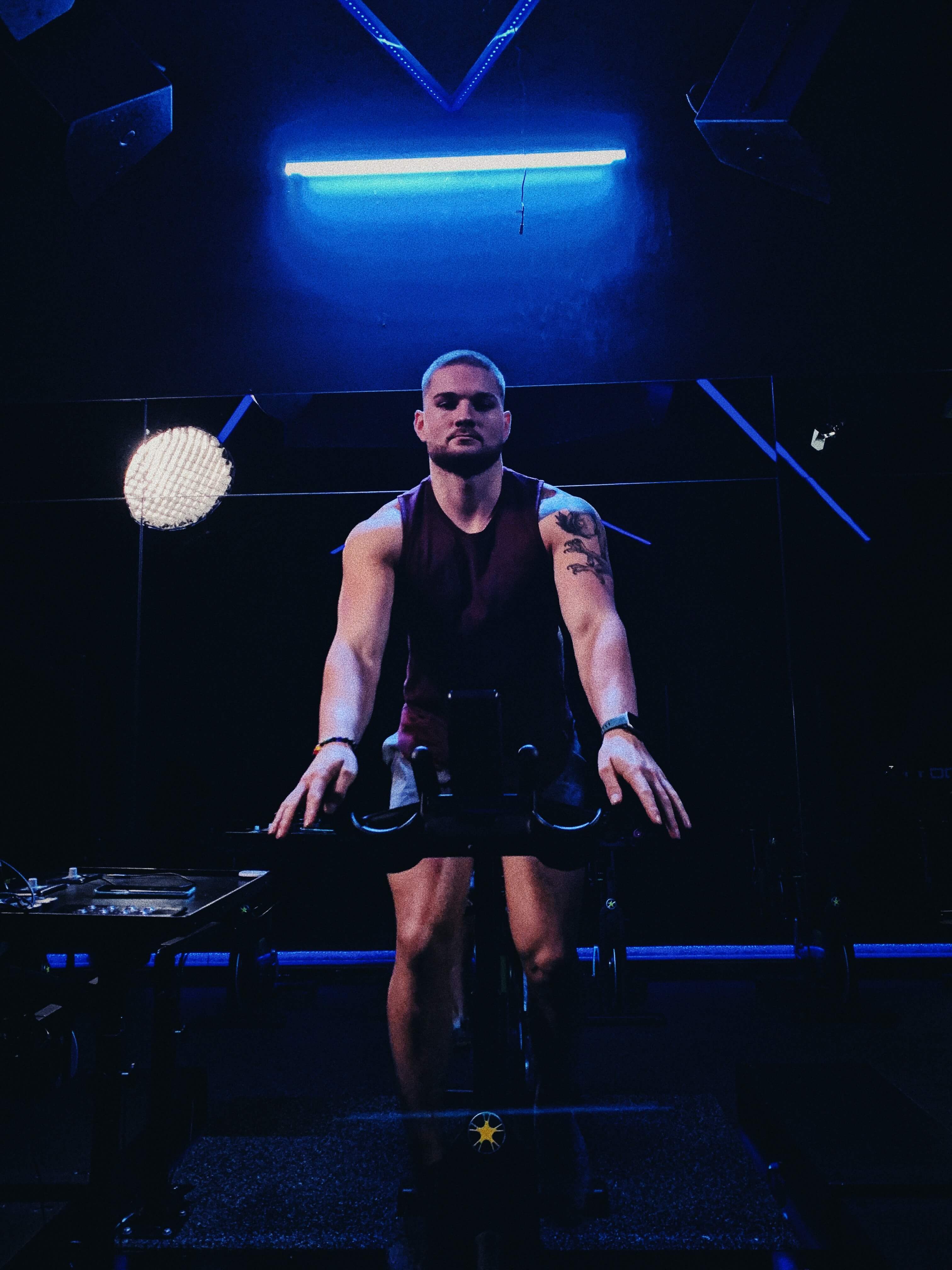
The modern founder stands at center stage, a single spotlight tracking their every move across the platforms of our age: LinkedIn, X, TikTok. They are not just building a company; they are producing a live, unscripted, one-person show about building a company. Every funding round is a dramatic plot point, every feature launch a soliloquy on innovation, every personal failure a carefully curated moment of “vulnerable” relatability. This performance is relentless, polished, and increasingly, the only thing anyone seems to be paying attention to. We have entered the era of the Founder-Performer, where the story of the work has become more visible, more valued, and more viral than the work itself.
This phenomenon isn't born of vanity alone, though there’s plenty of that to go around. It’s a rational, if ultimately corrosive, response to a fundamental shift in how attention, capital, and talent are allocated. In a world saturated with noise, the old metrics of success - a quietly growing user base, a sound balance sheet, a healthy team culture - are too slow and too quiet to register. The market now demands a spectacle. But here lies the dangerous question we must grapple with: What happens when the skills required to put on a good show are not just different from, but actively opposed to, the skills required to build an enduring institution? When the applause from the audience drowns out the quiet hum of a well-run machine, we are trading the substance of leadership for the shadow of performance.
The Rise of the Founder-Performer: A New Job to Be Done
Imagine a brilliant engineer in 2004 who has just built a revolutionary piece of software. Her path was clear, if arduous. She would demonstrate her product to discerning investors, write detailed technical blog posts to attract early adopters, and build a reputation through the quiet competence of her work. Fast forward to today. That same engineer is now told her first priority isn't perfecting her code, but perfecting her "personal brand." She is advised to hire a ghostwriter for LinkedIn, a videographer for her "day in the life" reels, and to spend hours crafting tweets that signal just the right mix of hustle, humility, and intellectual superiority. The product has become a prop in the theater of her personal narrative.
To understand this seismic shift, we must ask a crucial question: What "job" is this founder content being hired to do? In a hyper-competitive landscape, founders are no longer just competing for customers; they are in a bare-knuckle brawl for every scarce resource. They are competing for the five-second glance of a venture capitalist scrolling through their feed. They are competing for the talented engineer who has five other offers and is judging companies by the perceived "vision" of their leader. They are competing for the media cycle, where a viral post can generate more buzz than a multi-million-dollar ad campaign. The content, therefore, is being hired to do the job of signaling. It signals momentum, it signals insight, and most importantly, it signals that this founder is a protagonist worthy of a story - and an investment. The performance is a shortcut, a hack to win attention in a market that no longer has the patience for slow, quiet growth.
What Is "The Spectacle" and How Does It Work?
The Spectacle is the self-reinforcing system where the performance of building a company is rewarded more consistently and immediately than the actual, often messy, work of building it. It’s not just about posting online; it's a cultural feedback loop powered by algorithms that are ruthlessly optimized for engagement, not truth. Think of it as professional wrestling for the tech industry. We all know it’s not entirely real - the staged rivalries, the exaggerated triumphs, the telegraphed "raw" moments - but we agree to believe in it because it’s entertaining. The Spectacle has its own set of rules and rewards certain archetypes: the "Hustle Bro" who posts screenshots of his 4 a.m. emails, the "Vulnerable Founder" who monetizes personal trauma into a masterclass on resilience, and the "Thought Leader" who repackages decades-old business wisdom into a pithy, 280-character thread.
This system operates on a simple but powerful logic. The platforms that host The Spectacle don't care about your company's profit and loss statement; they care about watch time and engagement metrics. A nuanced, honest discussion about the brutal trade-offs of a product decision will always lose to a simplistic narrative of "crushing it." A quiet week spent fixing critical bugs and supporting your team generates zero content, while a single post about nearly going bankrupt before a miraculous turnaround can net millions of views. Consequently, founders are incentivized to live their lives in a way that generates compelling content. They aren't just documenting the journey; they are altering the journey itself to make it more documentable. The Spectacle, then, is a warped mirror that doesn't just reflect reality but actively reshapes it in its own image, prioritizing the story above all else.
The Dangerous Trade-Off: When Performance Undermines Leadership
Here we arrive at the heart of the problem. The daily habits of a performer are fundamentally at odds with the daily habits of a leader. A performer seeks an audience; a leader serves their team and customers. A performer optimizes for the immediate reaction - the like, the share, the comment; a leader optimizes for long-term outcomes - trust, stability, and sustainable growth. This creates a dangerous tension that we can call The Leadership Asymmetry: the most crucial work of leadership is often quiet, invisible, and unglamorous, while the work of performance is loud, public, and instantly gratifying.
When a founder becomes consumed by The Spectacle, their most precious resource - their attention - is diverted from where it's needed most. Instead of spending an hour mentoring a struggling manager, they spend it wordsmithing a LinkedIn post about mentorship. Instead of having a difficult, private conversation to resolve internal conflict, they craft a public thread about the importance of radical candor. Their team sees this disconnect with perfect, painful clarity. They watch their leader polishing the company’s external narrative while the internal culture cracks. Trust erodes not because the founder is a bad person, but because their priorities have been subtly hijacked by the demands of an audience that is not in the room. The company becomes a backdrop for the founder's personal brand, and the employees are reduced to extras in their show.
This performance trap also warps a founder’s decision-making process. Leaders are supposed to make difficult, often unpopular, decisions based on data and principles. But a performer is perpetually running a public approval poll. How can you make the right call to sunset a beloved but unprofitable product line when you’re worried about the backlash on X? How can you foster a culture of deep, focused work when you’re constantly celebrating the superficial theatrics of "the grind"? The Spectacle creates a powerful incentive to manage perception rather than reality. The founder stops asking, "What is the right thing to do for the business?" and starts asking, "What is the best story I can tell about what we’re doing?" These are rarely the same question.
Why Does the Audience Demand a Performance?
It would be easy to lay all the blame at the feet of insecure founders. But that would be letting the rest of us off the hook. We, the audience - the investors, the employees, the aspiring entrepreneurs, the curious onlookers - are the ones who buy the tickets to this show. The Spectacle exists because there is a ravenous demand for it. The question is, why? What "job" is this founder-as-performer content doing for us?
First, it simplifies a world that is terrifyingly complex. Building a successful company is a chaotic, unpredictable, and often luck-driven process. It’s a story of a thousand small decisions, boring operational meetings, and ambiguous data sets. The Spectacle replaces this messy reality with a clean, heroic narrative. It gives us a protagonist to root for, a villain (the incumbent, the doubters) to jeer at, and a clear story arc of struggle and triumph. It transforms the slow, grinding work of business into a compelling sport, allowing us to feel a part of the action without taking any of the risk.
Second, it provides a blueprint for aspiration. For aspiring founders, the content serves as a form of social learning. They see the performance and mistake it for the work itself. They believe that mimicking the communication style, the daily routine, and the public persona of a successful founder is a shortcut to achieving their success. It's far easier to copy a founder's morning routine from an Instagram story than it is to replicate the decade of unseen struggle and sacrifice that actually built their company. The performance offers a seductive, if misleading, promise: if you can talk the talk, you are already halfway there. This creates a generation of founders who are experts at pitching the dream but novices at executing the reality.
How Can Founders Escape The Spectacle? A Framework for Authentic Leadership
Escaping this trap does not mean a founder must become a hermit, shunning all forms of public communication. The goal is not to be invisible, but to be intentional. It’s about shifting from being a performer who happens to run a company to a leader who communicates with purpose. This requires a conscious decoupling of one’s ego from the metrics of public validation and a return to the first principles of leadership. The way out lies in reorienting one's focus from the external audience to the internal stakeholders who truly matter: the team and the customers.
The first step is to Redefine the Job of Communication. Before posting anything, a leader should ask: Who is this for, and what is its purpose? Is this piece of content designed to clarify our mission for our employees? Is it meant to educate our customers about a new feature? Or is it primarily designed to boost my personal follower count and elicit applause from strangers? Authentic leadership-driven communication serves the organization's goals, not the leader's ego. It is about transmitting clarity, not broadcasting status. This often means communicating more internally and less performatively externally. The most important announcements should be made to your team first, not to your LinkedIn followers.
The second step is to Measure What Actually Matters. The Spectacle has its own scoreboard: likes, views, retweets. It is addictive because it provides constant, immediate feedback. A true leader must build their own internal scoreboard based on metrics that reflect the actual health of the business and the team. This means obsessing over customer churn rates, not Twitter engagement. It means celebrating the engineer who spends a week on an unglamorous but critical bug fix, not just the salesperson who closes a flashy deal. By focusing the entire organization on the metrics of real progress, a leader starves the performance engine of the validation it needs to survive.
Finally, leaders must embrace Asymmetric Leadership. This is the practice of dedicating the vast majority of one's energy to the invisible, internal work that drives long-term success, while dedicating only a small, strategic fraction to external communication. It means accepting that your most important contributions of the day - a tough feedback session, a deep strategic discussion, an afternoon spent helping a team get unstuck - will never become a viral post. It is the quiet confidence of knowing that the health of the institution you are building is the ultimate measure of your success, not the size of your online audience. The goal is not to build a following; it is to build a company so good that it speaks for itself.
The choice for every founder today is stark. They can be the ringmaster of a dazzling, ephemeral circus, constantly seeking the crowd's approval and walking the tightrope of public perception. Or they can be the quiet architect of a cathedral, a structure built to last, with foundations sunk deep into the bedrock of trust, integrity, and genuine value. The latter path offers little in the way of daily applause, but it is the only one that leads to building something that endures long after the spotlight has moved on. The real legacy of a founder is not the story they told about themselves, but the institution they leave behind.
Frequently Asked Questions
1. What is the "Founder-Performer" and "The Spectacle" as described in the text?
The "Founder-Performer" is a modern founder who prioritizes producing a public performance about building a company over the actual work of building it. "The Spectacle" is the self-reinforcing cultural feedback loop, powered by social media algorithms, that rewards this performance more consistently and immediately than the quiet, substantive work of leadership. This system values engagement metrics and viral narratives over real business health.
2. Why have modern founders become performers instead of just leaders?
Founders have become performers as a rational response to a hyper-competitive environment where attention, capital, and talent are scarce. Their content is "hired" to do the job of signaling momentum and vision to VCs scrolling social media, talented engineers with multiple offers, and media outlets looking for a story. In a market that lacks patience for slow growth, this performance acts as a shortcut to gain visibility and resources.
3. How does "The Spectacle" undermine a founder's ability to lead effectively?
The Spectacle creates a "Leadership Asymmetry," where the loud, public work of performance is instantly gratifying, while the most crucial leadership work (mentoring, strategy, resolving conflict) is quiet and invisible. This diverts a founder's attention from their team and customers to an external audience. It erodes internal trust and warps decision-making, as founders may start optimizing for public perception ("what is the best story?") rather than for what is right for the business.
4. What are the key differences between the habits of a performer and the habits of a leader?
A performer seeks an audience, while a leader serves their team and customers. A performer optimizes for immediate reactions like likes and shares, whereas a leader optimizes for long-term outcomes such as trust, stability, and sustainable growth. The performer's focus is on crafting an external narrative, while the leader's focus is on solving internal problems and building a healthy organization.
5. How can founders escape "The Spectacle" and practice authentic leadership?
Founders can escape The Spectacle by consciously shifting their focus from their external audience to their internal team and customers. The proposed framework includes three steps:
1. Redefine the Job of Communication: Ensure communication serves the organization's goals (e.g., clarifying mission, educating customers) rather than the leader's ego.
2. Measure What Actually Matters: Focus on internal metrics reflecting business health (e.g., customer churn, team morale) instead of external validation metrics (e.g., likes, views).
3. Embrace Asymmetric Leadership: Dedicate the majority of energy to quiet, internal work and only a small, strategic fraction to external communication, accepting that the most important work will never be a viral post.

Luke Carter
Luke Carter is the founder of BraveBrand and is an authority on branding and neuromarketing that drives business growth. Say 👋 on LinkedIn!
Ready To Scale Your Brand?
Put an end to DIY branding an ineffective marketing and start attracting premium clients with total clarity.
Let's Chat Strategy