
While I was at the gym, my team built a full luxury events website — multi-page, connected to a CRM and booking system, SEO and GEO optimised, with original imagery. Total time: twenty minutes. The bill a traditional agency would send for that? Ten thousand pounds, minimum. And a month of back-and-forth emails you did not ask for.
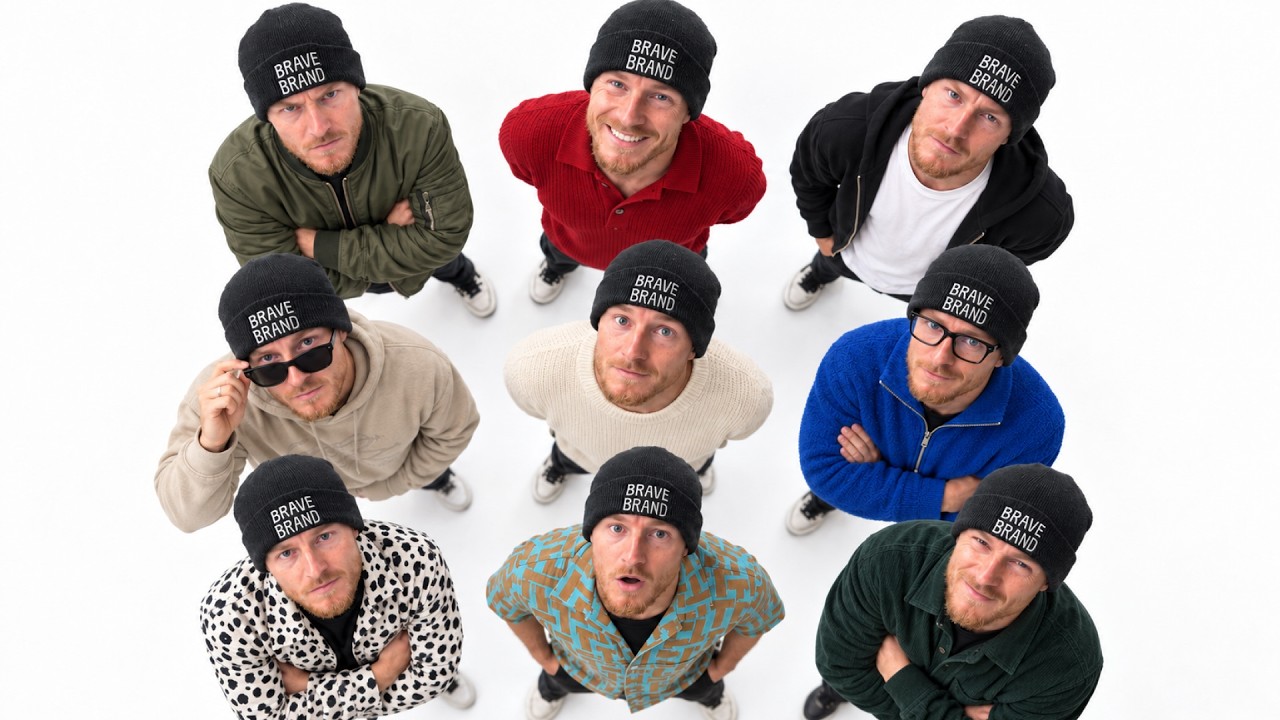
My team is not human. I built an entire web design team with AI — a crew of specialist agents, each with a defined role, who brief each other, correct each other's mistakes, and ship work I am proud to hand to a paying client. This is not a demo. It is how BraveBrand runs its agency right now. I broke the whole thing down on camera — the full video is below.
What I Actually Built (and Why It Matters for You)
The client was Good Company — a high-ticket events business selling luxury experiences around the world. They needed a website that felt editorial and expensive, a booking flow connected to a payment system, and a blog. They also needed the full backend: a command centre, a leads pipeline, email nurturing sequences, and a content calendar. What they got was what we call a Digital Home Revenue System — not a digital brochure, but a site that actually works for the business every single day.
A traditional agency would treat that brief as two or three separate engagements. Discovery. Design. Development. Copywriting. SEO. Image production. Backend setup. Each one billed separately, each one handed between departments, each one creating delays. I gave the brief to my agent team and went to make a coffee. When I came back, the infrastructure was standing.
That is the gap that every independent designer, developer, and one-person agency needs to understand right now. The market for mid-range web work has not just compressed — it has split. The bottom has evaporated. The premium end has grown. And the only people capturing the premium end are the ones who can ship complete, structured, defensible work at a pace that used to require a full team. That is exactly what i built an entire web design team with AI lets you do.
Why Everything You've Tried So Far Has Left You Stuck
If you are a web designer or developer who has been experimenting with AI, you already know the mixed-results problem. You can generate a decent homepage in an hour. You can get passable copy out of a prompt. You can produce something that looks finished from a distance. But when a client asks a pointed question about what is inside the build — how the SEO is structured, where the leads go, why a particular design decision was made — you cannot answer confidently, because the build was assembled rather than engineered.
That is the thing that kills the rate. Not the speed. The defensibility.
Most people have tried one of three things when AI started changing their work. They produced output faster, hoping volume would compensate for margin compression. They accepted the "just polish the AI slop" jobs at cut rates because at least it was revenue. Or they switched platforms — Webflow to Framer to GoHighLevel — hoping a different tool would solve a structural problem. None of those moves address the actual issue, which is that speed without a system produces inconsistent work you cannot stand behind professionally.
The freelance platform data makes this even starker. A Ramp study from early 2026 found that businesses which were spending on freelance marketplaces in 2022 had largely stopped by 2025. That spend did not move to a cheaper freelancer. It moved to AI subscriptions. At the same time, median small-business website projects rose to five to ten thousand dollars — up from two to five thousand five years ago. The bottom of the market is gone. The premium end is paying more than ever. The middle is where people are getting squeezed.
If you are still billing like it is 2022, the problem is not your skill level. The problem is your system. Or the absence of one.
The Real Problem: You Are Missing a Crew, Not a Tool
Here is the reframe. Every tool you have tried — every AI assistant, every no-code builder, every automation platform — was a solo instrument. You picked it up, played it, put it down. You were still the single point of failure. The work still required you to context-switch between strategist, copywriter, designer, developer, and account manager inside the same afternoon. That is not a workflow. That is a bottleneck with a MacBook.
What actually changes the game is a crew. Specialist agents, each trained for one role, who pass work between themselves the way a real agency does. When one agent makes a decision that contradicts another part of the brief, the other agents catch it and correct it — without you in the loop.
That happened in real time on the Good Company build. The brand strategist — our agent called Tumi — reviewed the image generation brief and flagged that the reference images were all solo subjects. No community energy. For an events brand built entirely on connection and shared experience, that was a meaningful contradiction. Tumi caught it, reported it to Simon the project manager, and Simon adjusted the image brief before the image agent started generating. I did not touch it. The crew handled it.
That is not a feature of any single AI tool. That is what happens when you build a system with defined roles, a chain of communication, and a project manager agent orchestrating the whole thing. The output you can hand to a client is not just faster — it is structurally sound in a way that a solo AI session never produces.
"Marketing is the new moat. AI has made websites, funnels, and products copyable overnight. The one thing it cannot replicate is the system behind the brand — and the practitioner who built it."
The Exact Blueprint: How the AI Web Design Team Actually Works
Let me walk you through the workflow exactly as it ran on the Good Company project, because this is the part you can copy.
Step one is the brief. Everything starts here, and the quality of the output is directly proportional to the quality of the input. A job is only as good as its brief — that is not a cliché, it is a system requirement. For Good Company, the brief covered the offer, the target audience, customer motivations, the emotional experience the site needed to communicate, and the functional requirements: booking flow, payment integration, blog. We also pulled together design references — editorial luxury examples from Framer, Pinterest, and Webflow — and gave them to the image agent as visual anchors. You collect those references yourself, write the brief yourself, and then you hand it to the system and step back.
Step two is the project manager agent. Simon — our AI project manager — receives the brief and breaks it into parallel workstreams. He briefs Tumi the brand strategist, the SEO and GEO strategist, Ley the copywriter, and the image agent. He is not a chatbot you ping with questions. He is the orchestrator who keeps the team aligned and flags blockers. When Tumi came back with the audience research, Simon incorporated her notes and fired the next workstreams simultaneously. Copy, SEO articles, and image generation all ran in parallel while I was at the gym.
Step three is brand strategy. Tumi does the audience research that used to take two to three weeks. Pain points, desire language, urgency gateways, what the audience has tried, what the aspirin is they actually want, what words they use across the internet. That research is saved directly into the Digital Home backend as a Brand Playbook — a source of truth the copywriter and SEO agent both pull from. On the Good Company build, it surfaced the community-versus-solitude contradiction in the imagery brief, which Simon then corrected. This is two to three weeks of brand strategy work done in minutes, and the output lives in the backend where the client can access it forever.
Step four is parallel execution. Once Tumi's work is locked, Simon kicks off three workstreams at once. The SEO and GEO strategist writes the first three articles for the website. Ley the copywriter writes all page copy using the Brand Playbook as the brief. The image agent generates original imagery using the corrected visual direction. All of this happens without a single message from me. I check in. I do not intervene.
Step five is the first review. When the first round of designs came in, I looked at the overall result before giving any detailed feedback. The imagery matched the design references closely. The copy was strong on first read. There were things I wanted to refine — the way faces were blurred in some images, a design element carried over too literally from a reference. That is where my role comes in: creative director. I give feedback, the agents revise, we go again. The refinement loop is fast because the foundation is solid. You are not rebuilding from scratch — you are finishing a structure that is already standing.
Step six is handoff. What the client receives is not just a website. It is a Digital Home Revenue System: the front-end site and the full backend — command centre, leads pipeline, funnels, email sequences, content calendar, Brand Playbook, social media scheduling. A static brochure that looks nice does nothing. A connected revenue system does the work every day. That is the difference between a five-hundred-dollar job and a ten-thousand-dollar job, and it is what the market is now paying for at the premium end.
What Does This Mean If You Are Already Running Client Work?
If you are a web designer, developer, or one-person agency, there are two ways to use this immediately. The first is for your own business: install the Digital Home Revenue System as your own infrastructure, run your agency on it, and let the agents handle execution while you focus on client relationships and creative direction. The second is to sell the build itself. Most of your clients are currently on GoHighLevel, Squarespace, Wix, or Webflow — paying monthly rent for something they will never own, with contacts locked to a platform they cannot leave without losing everything. You can move them off that and onto a system they own outright. The monthly platform fee they were paying can now come to you instead.
This is not theoretical. BraveBrand runs a live, auditable agency on exactly this crew. The email engine sent over one thousand emails in seven days at a thirty-six percent open rate. The backend is running a cron on a five-minute cycle. The MRR is real and growing. When we say the crew being sold is the crew running this business, we mean it literally — and you can verify it. That is a claim almost nobody else in this market can make. Most people selling AI agency systems are selling a demo. This is provenance.
The case for i built an entire web design team with AI is not about the novelty. It is about the competitive position it creates. When you can deliver a complete, structured, defensible Digital Home in a single sitting — research, copy, design, imagery, backend, SEO — you are not competing on price with a twenty-dollar-a-month AI subscription. You are competing at the premium end of a market that is paying more than ever for work that actually works. That is the moat. We've shown the one-hour website and CRM build before. The agent team takes it further: it is not just faster, it is a repeatable system with specialist roles and internal correction built in.
The builders who figure this out in 2026 are going to look back at this the way early Webflow designers looked back at learning Webflow in 2015. The ones who wait are going to be explaining to clients why it takes them a month to build something an agent team can ship in twenty minutes.
If you want to understand why ownership is the foundation underneath all of this — why the backend matters as much as the front end, and why your clients need to own their data rather than rent it — this piece on owned audience strategy explains exactly why the platform-rental model is a liability waiting to detonate. And if you want to see how the AI tools that actually run a business fit together, the short list of tools founders actually use is worth reading alongside this.
The Moat Is the System, Not the Speed
AI has made websites copyable. It has made funnels copyable. It has made offers, logos, and content templates copyable overnight. The one thing it cannot copy is the system behind the brand — the opinionated workflow, the specialist crew, the Brand Playbook that lives in the backend, the creative director who knows what good looks like and can direct a team toward it.
That is the marketing moat. Not the tools. Not the speed. The defensible, repeatable system that produces work a client trusts and a practitioner can stand behind. Every time a new model ships and the ground shifts under someone else's career, the person with a complete crew and a proven workflow gets more valuable, not less. Because the crew absorbs the new capability and the system keeps running.
My old creative director used to breathe over my neck as a front-end designer ten years ago. Now I am the creative director, and the team does not sleep, does not miss a brief detail, and does not send me a Slack message at midnight. What a time to be alive.
Watch the full video walkthrough here: I Built an Entire Web Design Team with AI — YouTube
Ready to Build Your Own Crew?
If you want access to the agents, the workflow, and the Digital Home Revenue System we built in this article, the BraveBrand community on Skool is where we teach it end to end. Designers, developers, and one-person agencies are already inside, learning to take on more clients at better rates with a crew that does the heavy lifting.
Join the BraveBrand community on Skool and get access to the full Digital Home workflow — the same one running this agency right now.
Or if you want to see what a complete, done-for-you brand build looks like on the other side, see client results from people who have already made the move.
Frequently Asked Questions
What does it mean that you built an entire web design team with AI?
It means creating a set of specialist AI agents — each with a defined role like project manager, brand strategist, copywriter, SEO specialist, and image generator — that work together on a single brief the same way a human agency team would. The agents brief each other, catch contradictions, and deliver a complete front-end and backend system without a human managing every step.
What tools did you actually use to build this agent team?
The agents run inside a shared workspace called Buzz, where both AI agents and human team members collaborate in one place. The Digital Home backend is built on an open-source, AI-native stack. The exact toolset is covered inside the BraveBrand Skool community, where the full workflow and agent setup are taught step by step.
How long did the Good Company website actually take to build?
The initial build — brand research, copywriting, SEO articles, image generation, and full backend setup — took approximately twenty minutes of active agent work. That is the time it ran while I was making coffee and going to the gym. Refinement and creative direction add time on top, but the structural foundation is complete in a single sitting.
Can I sell this kind of build to my existing clients?
Yes, and that is one of the core use cases. Most clients are currently on rented platforms like GoHighLevel, Squarespace, or Webflow, paying monthly fees for something they do not own. You can move them onto a Digital Home Revenue System they own outright — and the monthly platform fee they were paying can come to you instead as a service retainer. When you have i built an entire web design team with AI capability, you can take on more clients at premium rates without adding hours to your week.
What is the Digital Home Revenue System?
It is the combination of a fully designed, multi-page website and a complete backend — command centre, leads pipeline, funnels, email nurturing sequences, content calendar, and Brand Playbook — all connected and running as one system. It turns a static digital brochure into a site that generates and converts leads every day, which is why it commands a premium price rather than a commodity rate.
Do I need to be a developer to run this workflow?
No. The system is designed so that your role is creative director — you write the brief, review the output, and give feedback. The agents handle research, copywriting, image generation, SEO structuring, and backend setup. Technical fluency helps you give better feedback and customise the build, but the workflow is built for practitioners who want to deliver results, not manage code line by line.

Luke Carter
Luke Carter is the founder of BraveBrand and is an authority on branding and neuromarketing that drives business growth. Say 👋 on LinkedIn!
Want To Build This Yourself?
The Digital Village is where founders build their own brand and AI systems next to other people doing the same. It runs on Skool for $14 a month.
Join The Village